
Residents of Kampung Pitas Laut, Kinabatangan no longer have to rely on costly diesel generators for electricity after a new community-based solar energy system began providing round-the-clock power to the remote coastal village.
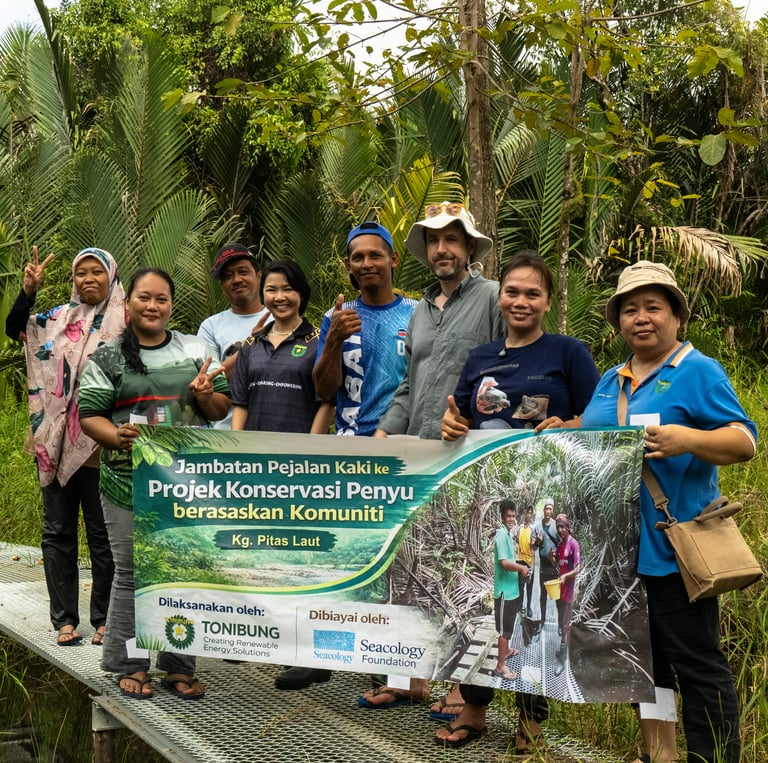
The Indigenous fisherman in Suluk community recently completed a 39.2 kilowatt-hour (kWh) solar energy system, bringing 24-hour electricity to homes and community facilities for the first time. The project also included the construction of a 200-metre steel bridge, improving access for a women-led group involved in turtle conservation along the coastline.
Kampung Pitas Laut, located within the Lower Kinabatangan Segama Wetlands, is accessible only by boat and highly dependent on tidal conditions. The village is home to about 150 residents living in around 20 households, with most families relying on small-scale fishing and marine harvesting for income.
Before the project, electricity came from shared diesel generators that operated only a few hours each night. Fuel had to be transported by boat, making it expensive and unreliable.
“I used to spend more than RM700 a month just to buy diesel for our generator,” said Muhar, a villager.
“Now we have electricity all day and night, and we don’t have to worry about fuel anymore.”
The project was implemented under the Sabah Renewable Energy Rural Electrification (SabahRE2) Roadmap, which promotes renewable energy solutions for off-grid and rural communities across the state. Installation of the solar system was carried out by TONIBUNG, an Indigenous-led organisation based in Sabah, in collaboration with Green Empowerment and Forever Sabah. The system is owned and managed by the community, with tariff collection handled locally to cover operation, maintenance, and future upgrades.
According to the project partners, the solar system was designed with excess energy capacity, allowing the community to support small businesses such as ice production, cold storage for fish, and food processing activities that were previously not possible due to limited power supply.
Funding for the project came from Seacology, an international non-profit organisation that supports community-led conservation and livelihood projects in island and coastal regions, as well as EKOenergy, a global not-for-profit ecolabel that channels climate funds into renewable energy projects for rural communities.
Beyond electrification, a key feature of the project is its support for women’s leadership and conservation efforts. The newly built steel bridge connects the village to turtle nesting areas along the coast, making it safer and easier for women to conduct night patrols, monitoring, and protection activities.
Fauziah Pullah, a representative from the women’s group said the bridge has significantly improved their work.
“Before this, access to the nesting sites was difficult and sometimes dangerous, especially at night,” she said.
“Now we can monitor the turtles more safely, and women are leading this conservation work.”
The Lower Kinabatangan–Segama Wetlands is a designated Ramsar Site and one of Sabah’s most important mangrove and marine ecosystems. With reliable electricity, improved access, and conservation infrastructure in place, the community is now exploring eco-tourism opportunities, including guided nature visits and conservation-related activities.
For TONIBUNG, the Pitas Laut project reflects its broader approach to rural electrification in Sabah and Sarawak focusing not only on technology, but also on community ownership, capacity building, and long-term sustainability.
The project began with the fabrication of the solar house in June 2025, followed by solar panel installation in September 2025. The system was fully commissioned and handed over to the community in November 2025, with community-led tariff collection starting in December 2025.
Today, Kampung Pitas Laut stands as an example of how renewable energy can reduce household costs, support conservation, and create new livelihood opportunities, even in the most remote parts of Sabah.
As Sabah continues its push for rural electrification, the Pitas Laut project shows that community led renewable energy can bring lasting benefits, powering not just homes, but also hope for the future.
Alice Jipius
11 February 2026
Contacts
tonibung@gmail.com info@tonibung.org
Follow us on Social Media!
+6 088 722 676
CREATE Borneo, Kg. Nampasan,
89500 Penampang, Sabah, MALAYSIA
Office Address
Training Center / Workshop Address
Block M, Lot 5, 1st Floor, Donggongon Town,
89500 Penampang, Sabah, MALAYSIA